
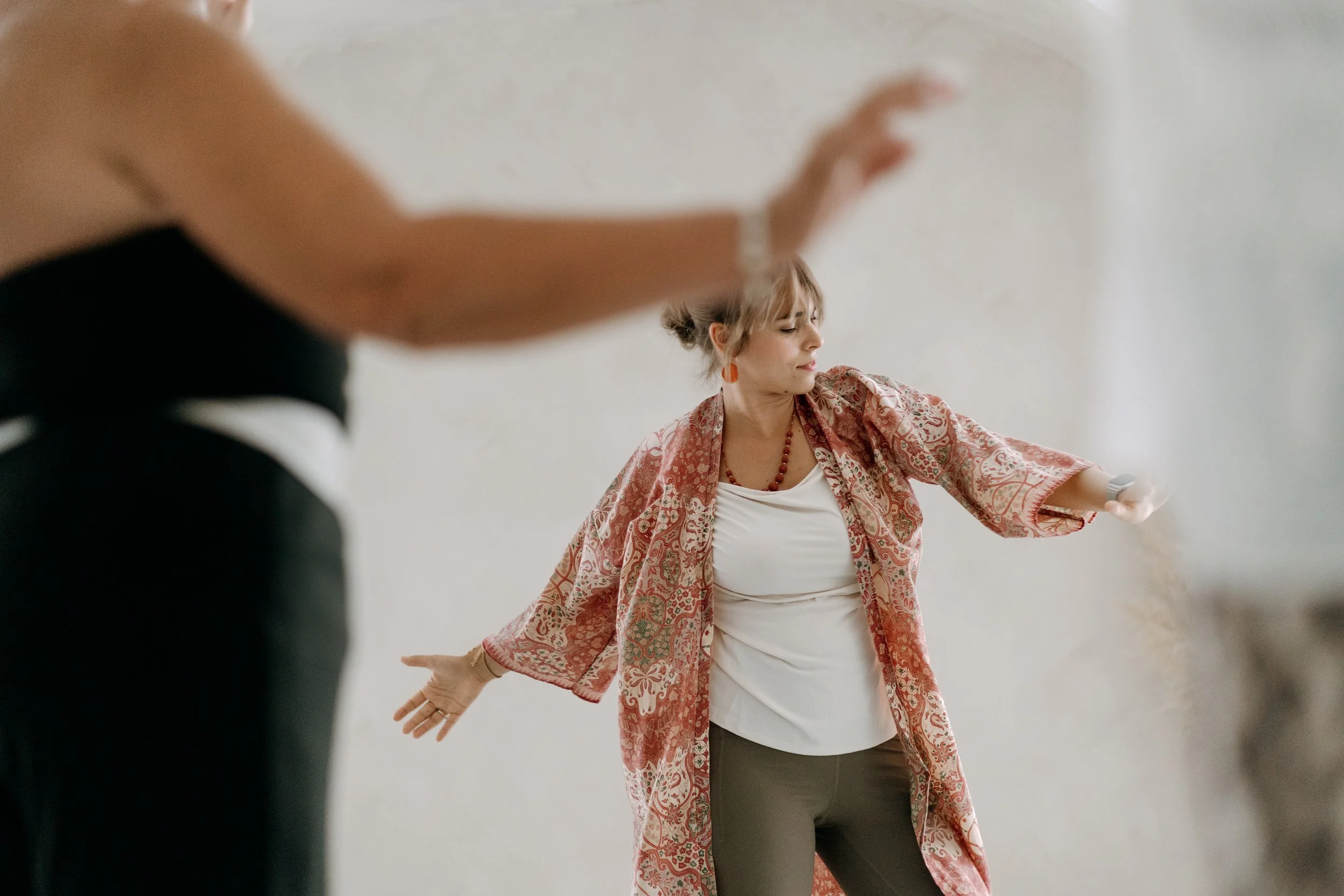
Mind and body cannot be separated
What is held in the body
shapes how we feel, think, and relate.
For people who think too much and feel too little.
1:1 & group body-based sessions in English — Vienna
No choreography. No performance. No dance experience needed.
Body-based Dance Movement Therapy · Vienna
Sound familiar?
You’ve analysed the problem from every angle. You know what’s wrong — but it doesn’t shift.
You function well on the outside. Inside, something feels tight, stuck, or absent.
You sleep but don’t rest. You think but don’t resolve. You manage — but at a cost.
This is often what it looks like when the body is holding what the mind cannot process alone.
When Thinking Isn’t Enough
Most people try to think or talk their way through stress and overwhelm.
For a while, that can help.
But emotional experiences are not only cognitive processes. They are also held in the body — in tension, breath, posture, and movement patterns.
Dance Movement Therapy works with these bodily expressions to access experiences that may not yet have words.
Research in this field understands movement as a form of nonverbal communication through which emotional and relational patterns can become visible and explored.
This work is not about learning to dance.
It is about understanding how you feel and move in your body.
What a session might look like
There is no fixed structure.
Each session follows what is present that day — your pace, your body, your experience.
But most sessions move through three simple phases.
1. Arrival
We begin by arriving — not just physically, but in the body.
We take a moment to notice how you feel today, both in words and in bodily sensations.
This helps us understand where the process begins.
2. Movement exploration
Through gentle movement, breath, and awareness we explore what is happening in the body.
There is no choreography and nothing to perform.
Sometimes movements are small — a shift of weight, a gesture, a change in posture.
Sometimes they grow into larger expressions.
I may mirror or respond to your movement to help bring awareness to patterns that are emerging.
3. Integration
Toward the end of the session we slow down and reflect on what was experienced.
We connect the movement process with words and meaning.
Many people leave with a clearer sense of what their body was expressing.
Often something shifts — not only in thought, but in the body.
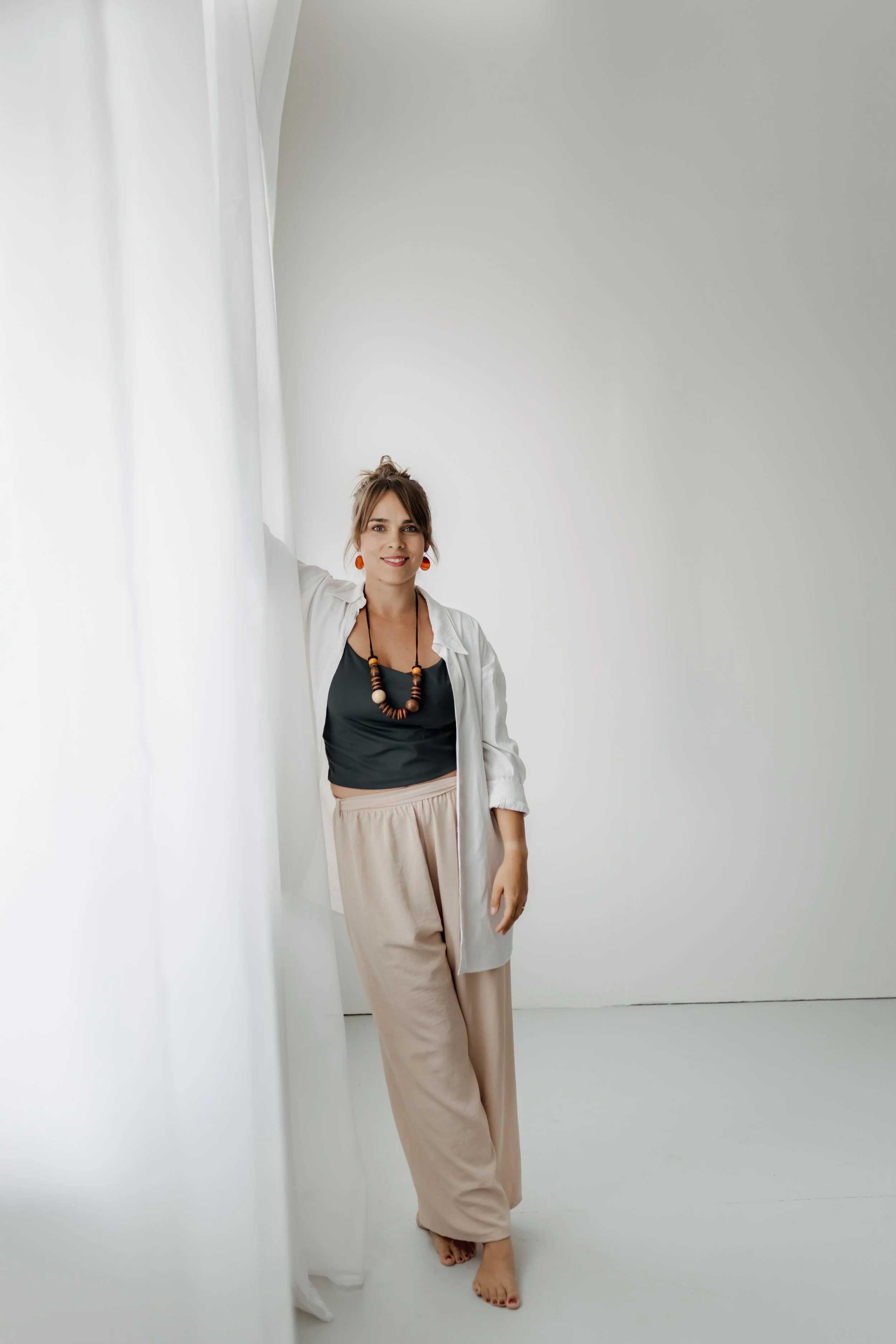
My name is Zuzana
My path to Dance Movement Therapy began through dance and movement. Over time, I became increasingly interested in how the body expresses emotional experience.
I was fascinated by how posture, gesture, and movement can reveal things that are difficult to put into words.
This curiosity eventually led me to train in Dance Movement Therapy.
Professional grounding
Dance Movement Therapy brings together psychology, movement analysis, and research on nonverbal communication.
In this field, movement is understood as a way people express emotions, relational patterns, and inner experiences.
Through movement exploration and attentive observation, these experiences can gradually become more visible and easier to understand.
How I work
In sessions I work with:
• body awareness
• movement exploration
• noticing movement patterns
• reflection and dialogue
The process is collaborative and unfolds at your pace.
Rather than trying to change something quickly, the focus is on noticing what is already present in the body and allowing it to move, express, and integrate.
If you feel curious about this work, you are welcome to book a first session.
Dance Movement Therapy and body-based sessions in Vienna offer an approach to emotional wellbeing that works through movement, bodily awareness, and nonverbal expression.
Sessions are available in English for individuals and small groups.
Ways We Can Work Together
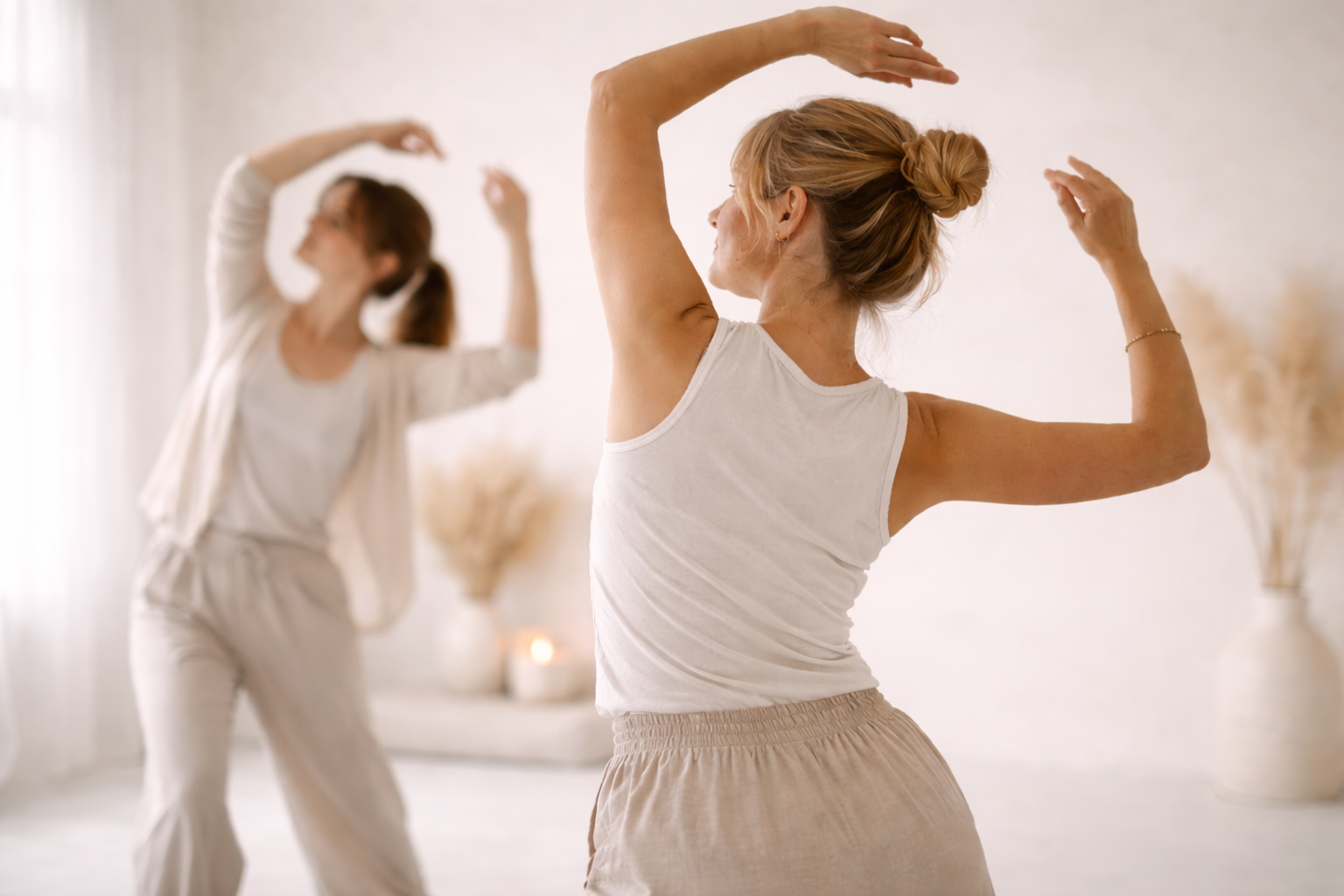
1:1 Dance Movement Therapy
Recommended starting point.
Individual sessions tailored to your personal needs.
Using movement, breath, and body awareness, we work with stress, overwhelm, and emotional patterns held in the body.
This is the recommended starting point if you feel stuck, dysregulated, or navigating ongoing stress.
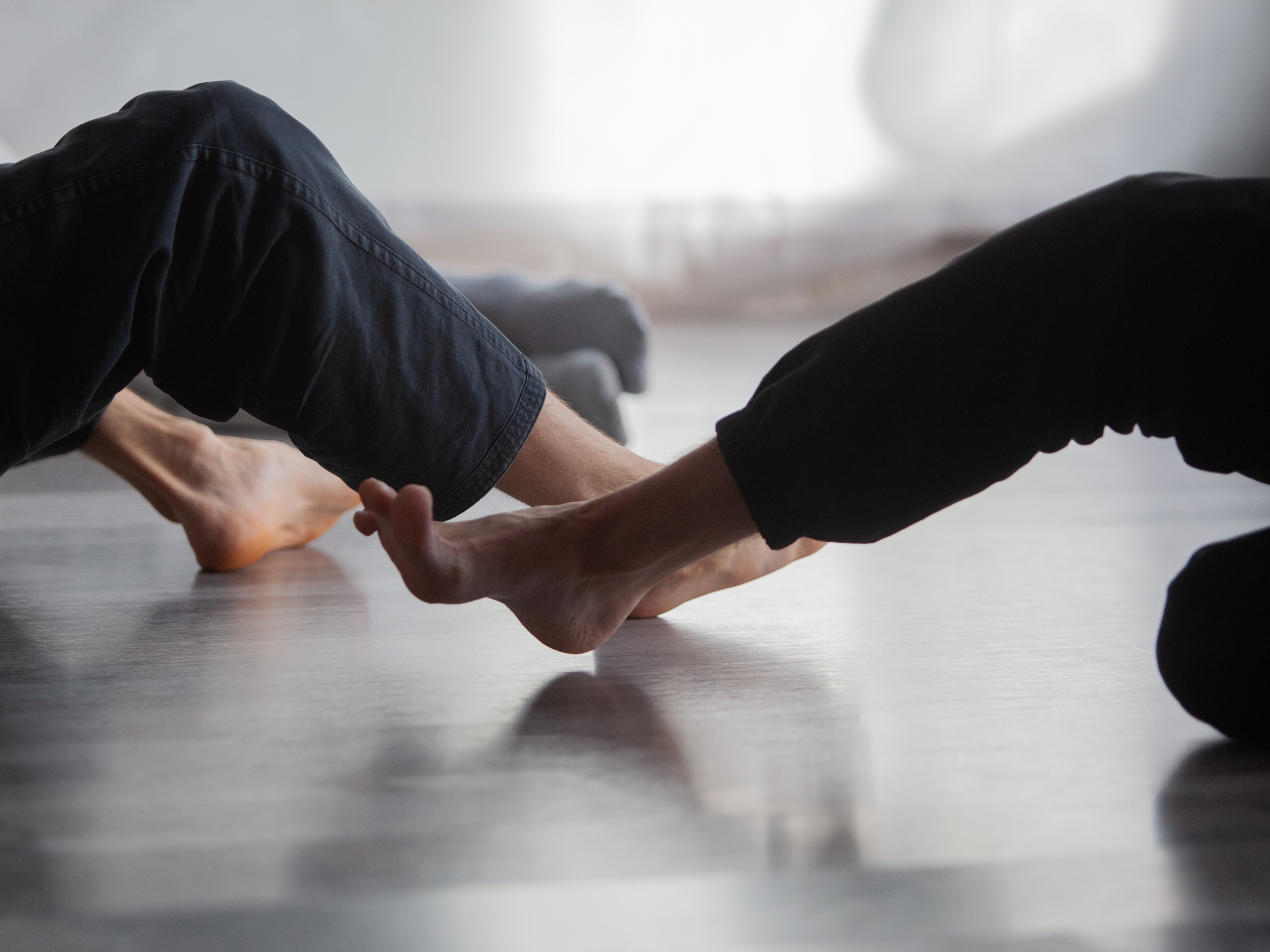
Group Sessions & Workshops
Small, structured group sessions focused on nervous system regulation, stress release, and embodied reconnection.
Groups offer a supportive space to explore movement and emotional processes together.
They can be a gentle entry point into body-based therapeutic work.
Dance Movement Therapy in Vienna offers a body-based therapeutic approach that works through movement, body awareness, and nonverbal expression.
If you’re curious but unsure, these answers might help you take your first step
-
Not at all. This isn’t about learning steps or performing. It’s about how your body feels, not how it looks. You can come exactly as you are — tired, curious, messy, emotional — it’s all welcome here.
-
We always begin by arriving —through breath, grounding, and gentle movement. Then, you’re guided to explore expression through your body’s natural impulses — sometimes slow and mindful, sometimes playful and free. There’s space to reflect, share, or simply notice what changed.
Every session is different, because you are different each time.
“Is this a dance class?”No. Dance Movement Therapy is a therapeutic process, not a dance class.
No choreography. No performance.
Your natural movement is enough. -
That’s completely natural. Movement often releases stored feelings. You’re supported to experience emotions safely, with guidance and care.
-
Many people feel that way at first. The space is small, non-judgmental, and built on respect. You decide how much you move, share, or stay quiet — there’s no pressure to perform or even talk. It’s enough to just be present.
-
Comfortable clothes that let you move freely and breathe easily. You can be barefoot or wear soft socks. Bring a bottle of water and, most importantly, an open mind — everything else is already here.
-
For anyone feeling tense, stuck, overwhelmed, or simply curious to explore themselves through movement. You don’t need to identify as a dancer — just a human being with a body that feels and remembers.
-
In Vienna, in a calm studio environment, also at Hilfswerk on Florianigase or sometimes outdoors during special workshops.
-
Both. You can join small group circles for shared connection or book individual sessions for a more personal process. I recommend to start with individual sessions first.